HORIZON INTERNATIONAL SOLUTIONS SITE
Working to Find and advance solutions to environment, health, poverty, and development problems
Around the world, extreme weather events are causing the public and scientists to ask, " What is happening to our world?" Torrential floods in Mokwa, Nigeria in 2025 killed more than 700 people as water raged through the center of the city. Ferocious fires still underway today in southwest France have caused more than 300,000 people to evacuate their homes. Extreme droughts "in Ethiopia, Kenya, and Somalia have left 23 million people without reliable access to food and water," according to Islamic Relief Canada.
Such extreme "weather events' are attributed by scientist all over the world as caused by climate change. They now warn that climate change is happening faster than any previous estimates indicated.
On the 18th of June 2026, the United Nations warned that "Millions of people already facing hunger, displacement and economic hardship could soon face another major climate shock... as extreme weather risks are intensifying across some of the world’s most vulnerable regions."
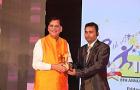
On April 2, 2025, Sulabh International inaugurated the Dr. Bindeshwar Pathak Memorial Centre on his 82nd birth anniversary. The Memorial chronicles the life and work of Dr. Pathak, who led a nationwide sanitation movement to persuade millions of India to adopt an affordable toilet system that he developed in 1968.
Our session will explore “Seeing the unseen: The value of water,” including climate change, ecosystems, sociocultural and economic factors along with how water scarcity, poor water quality and inadequate sanitation negatively impact food security, livelihood choices and educational opportunities for poor families across the world and, in fact, everyone.

13 March 2022 -- Geneva / New York -- “Today, we call for an immediate cessation of all attacks on health care in Ukraine. These horrific attacks are killing and causing serious injuries to patients and health workers, destroying vital health infrastructure and forcing thousands to forgo accessing health services despite catastrophic needs.
"To attack the most vulnerable – babies, children, pregnant women, and those already suffering from illness and disease, and health workers risking their own lives to save lives – is an act of unconscionable cruelty.
_-_ruins.jpg)
Jennifer Selendy worked with seven people, including Royesh, to rescue more than 500 people, including more than 400 schoolgirls, their family members and teachers, from October through November, according to the Thirty Birds Foundation, at https://www.30birdsfoundation.org/, the organization their group founded to support the evacuation mission.
“I could not live with myself if I did not act to help women and girls facing such extreme emotional and physical abuse and systemic injustice,” Jennifer Selendy, Managing partner Selendy & Gay.

“Today is a great day for science and humanity. The first set of results from our Phase 3 COVID-19 vaccine trial provides the initial evidence of our vaccine’s ability to prevent COVID-19,” said Dr. Albert Bourla, Pfizer Chairman and CEO. “We are reaching this critical milestone in our vaccine development program at a time when the world needs it most with infection rates setting new records, hospitals nearing over-capacity and economies struggling to reopen."

China has made progress in improving water supply and sanitation(WSS) coverage over recent decades. The WSS services include water treatment plants and pipelines, sewer networks and wastewater treatment plants, and household service connections.
We take Zhejiang province as an example.
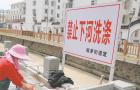
For his Internship with Horizon International, an NGO based at Yale University, Zakaria focused on WASH, seeking stories to film from trash polluting city waterways serving as drinking water for local communities to the struggles to find potable water in rural communities. It was this search which lead him to the Ivory Coast.
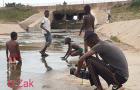
During World Water Week (25-30 August 2019) in Stockholm, The World Health Organization (WHO) and UN-Water called for an urgent increase in investment in strong drinking-water and sanitation systems. They cited a report by WHO published on behalf of UN-Water that “reveals that weak government systems and a lack of human resources and funds are jeopardizing the delivery of water and sanitation services in the world’s poorest countries – and undermining efforts to ensure health for all.” The report,” Weak systems and funding gaps jeopardize drinking-water and sanitation in the world’s poorest countries,” UN-Water Global Assessment and Analysis of Sanitation and Drinking-Water 2019 (known as the GLAAS report), surveyed 115 countries and territories, representing 4.5 billion people. It showed that, in an overwhelming majority of countries, the implementation of water, sanitation and hygiene policies and plans is constrained by inadequate human and financial resources.
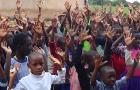
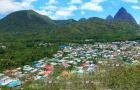
In 1965, the government of St. Lucia and the Rockefeller Foundation undertook what became a sixteen-year project to determine the optimal strategy for controlling locally-endemic schistosomiasis mansoni. Many of the world’s leading researchers on schistosomiasis control participated in the project, including experts in epidemiology, snail ecology, water and sanitation, social mobilization, clinical trials, immunology, and health economics. In the process, they brought infection levels in the new island nation to an impressive and steady low. Now fifty years later, the island has maintained its control of the parasite and may be on the cusp of achieving national Schistosoma mansoni elimination status.