
HORIZON INTERNATIONAL SOLUTIONS SITE
Working to Find and advance solutions to environment, health, poverty, and development problems
Around the world, extreme weather events are causing the public and scientists to ask, " What is happening to our world?" Torrential floods in Mokwa, Nigeria in 2025 killed more than 700 people as water raged through the center of the city. Ferocious fires still underway today in southwest France have caused more than 300,000 people to evacuate their homes. Extreme droughts "in Ethiopia, Kenya, and Somalia have left 23 million people without reliable access to food and water," according to Islamic Relief Canada.
Such extreme "weather events' are attributed by scientist all over the world as caused by climate change. They now warn that climate change is happening faster than any previous estimates indicated.
On the 18th of June 2026, the United Nations warned that "Millions of people already facing hunger, displacement and economic hardship could soon face another major climate shock... as extreme weather risks are intensifying across some of the world’s most vulnerable regions."
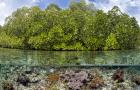
Two successful MAP projects ...are Nai Nang Village in Thailand, and the Bay of Jiquilisco in El Salvador. In both, after the initial Community-based Ecological Mangrove Restoration (CBEMR) training and restoration, the projects and conservation have been locally driven and shaped as a result of working together.
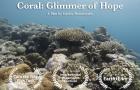
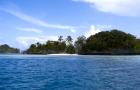
A team of scientists went to the Western Pacific Island chain of the Republic of Palau to unlock the mysteries of species that may contain a secret of adaptation for survival. The film “Coral: Glimmer of Hope” summarizes their journey and findings to date. The Republic of Palau is a country comprised of hundreds of islands.
Horizon International co-created the Exchange alongside USAID and organizations from across government, business, academia, and NGOs who believe that together we can tackle humanity’s greatest challenges. The Exchange is providing over 300 summaries of resources from Horizon’s Solutions Site with links to the full articles and case studies and anticipates to soon have over 600 posts from the Solutions Site’s 1,500 plus resources. Explore resources on the Exchange from Horizon International at http://www.globalinnovationexchange.org/resources/organization/3013.

Efforts on every scale from international to local, cooperatively and individually, are increasingly responding to this stark reality by setting aside land and regions of the seas as preservation areas which are now being protected to various extents. President Obama has taken again this past week action to invest and conserve America's natural treasures. President Barack Obama commented on the 12th of February 2016 upon designation of millions of acres in three new national monuments in the California desert to bring the land and sea he has protected to 265 million acres.

According a National Science Foundation (NSF), scientific literature and fisheries management and conservation efforts have for years assumed that the survival of adult fish is relatively constant through time. They further held that most fluctuations in the numbers of adults come from variation in the number of young fish that are produced and survive to maturity. Those assumptions have been challenged by new research by the National Science Foundation's Long-Term Ecological Research (LTER) Network.
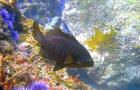
On October 28, 2015, Tommy E. Remengesua, Jr., President of the Republic of Palau signed into law the “Palau National Marine Sanctuary Act,” creating “the sixth largest marine protected area in the world, while setting aside a zone for domestic fishing.” According to Nature Conservancy Palau supports more than 400 species of coral species and nearly 1,300 varieties of reef fish.
Rajendra Singh of India is named the 2015 Stockholm Water Prize Laureate, for his innovative water restoration efforts, improving water security in rural India, and for showing extraordinary courage and determination in his quest to improve the living conditions for those most in need.
U.K. government establishes world’s largest fully protected marine reserve and sets a new standard for monitoring. The 834,334-square-kilometre reserve (322,138 square miles) is home to at least 1,249 species of marine mammals, seabirds and fish, the new reserve protects some of the most near-pristine ocean habitat on Earth.
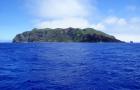
Sharks are safer in the Pacific Ocean, thanks to Micronesia's establishment of the world's second-largest shark sanctuary. The protected area, equal in size to India, will help strengthen the marine ecosystem and economy.